

Improv is an incredibly useful tool for any type of performer as it teaches you to be more confident, spontaneous, human, and free onstage! But how can improv help offstage?
Improv helps with real-life skills such as:
- Confidence
- Listening skills
- Self-trust
- Collaboration and teamwork
- Adapadability during times of change
- Building community
- Finding a sense of play and joy in adult life
And….. so much more! I had the pleasure of chatting with some Hoopla students and performers about the way improv has helped them in their real lives! We had such lovely and inspiring conversations, read on to see what they all had to share! 🙂
Alex Webster
Currently getting a BA in Theatre
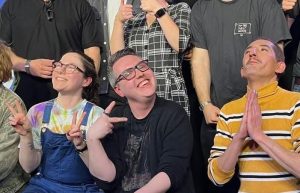
Improv has completely changed my life. Hoopla has literally been like therapy to me. It’s that one day a week where I can just forget any problems and be silly and have fun. I am honestly a changed person. Before improv I suffered from quite severe anxiety, and improv inspired me to take chances I never thought I would take. I would not be at university if I hadn’t done Hoopla. It was one of the reasons I realized- I am going to get this degree- what’s the worst that can happen. It literally did change my life, it’s the best thing I ever did. Improv allowed me to go back to school because it helped me learn to embrace the unknown. Beforehand I was so settled, and I knew what tomorrow brought, and I was bored of it to be honest. Getting a bit older I started deciding I needed to make some changes. And I’m not scared of change anymore. I used to be terrified of change, and now I’m okay with it. I tell everyone about improv and I think everyone should do it. It changed me and everything about me.
Jon
Works in TV post-production
I started improv because I had to do a best man speech. I had done a few before and always found them very daunting. I don’t like standing up and presenting. I did a public speaking course, which actually didn’t really help because you’re still just practicing reading off a piece of paper. I then started the Hoopla beginners course and have now gone through level 4. And what it’s actually done, besides just being really fun and supportive, is force me to be truly in the moment. When there is nothing scripted to say, it’s very freeing. That freedom was a new feeling for me. Since doing the course, I did the best man speech and found it much easier. In my daily life, doing improv has really emphasized my ability to listen. That’s a massive part of improv, is listening to what your scene partner is saying. Because if you don’t listen to what they are saying, you’re in a different world or different story. And in real life, if I’m going to a party or meeting new people, now I’m not in my own head thinking about what I’m going to say, what if they say this, what if they say that. Now I just treat it like an improv scene and trust I can go in, see what the other person says, fully listen, and respond naturally. The listening and being in the moment has really been the main thing for me.
Steve Roe
Director of Hoopla
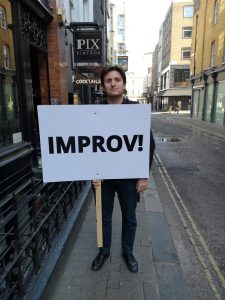
I started improv over 20 years ago. I think it helps life all the time. Before I started improv I was on a graduate scheme in my early 20s. It was meant to be a dream job, but I found that with things like presenting to people and even just having small meetings, I was so bad at it and got so nervous. I felt like I’d found myself landed in adult life and I was like- woah- I’m missing some stuff here. I had a lack of confidence in being in front of an audience. And I felt weirdly stuck in life and not able to take risks and go for things sometimes. When I started improv classes the benefit was kind of immediate, the biggest benefit I got was.. Being happy. Being happy in adult life. I realized adult life can be fun and playful. I really liked the fact that there were people of all different ages there. Some of my first improv friends were 20 years older than me. It gave me hope for the future. Keeping a sense of humour and play while navigating through anything in life was a big one. The original reason I went I don’t even think about anymore because I’m so comfortable talking to audiences now. Even at short notice, if someone is like “can you come chat to this room of people” I’m just like “yeah sure what’s the topic” and they’ll be like it’s 500 people and I’ll be like “okay” and even just that is way above and beyond what I thought I’d get from it. Just by doing improv regularly a lot of other things in life start to feel a lot easier. If you’ve been improvising without any preparation in front of an audience, then just saying a few words at a meeting becomes a lot easier. Also definitely creativity, it gives you a shared language and understanding for creating ideas using listening and Yes, And. Also being able to let ideas go. When I was working in TV, sometimes I would have to pitch 20 ideas and only 1-2 would make it. Improv helped me be excited to create all those ideas, and easily let go of the ones they didn’t take and not take rejection personally. Being in an environment regularly where you can play and come up with stuff, but know that if you make a mistake you can weave it in or learn from it has been really helpful. There’s a good Keith Johnstone quote which is “accelerate your rate of failure” and now if I’m embarking on learning something new I can just accept that I’ll probably be bad at it the first 1,000 times I try, so I’m going to try 1,000 times as quickly as possible. I feel much more comfortable being in the beginner zone. Being a parent improv helps a lot too, because you’re just already used to playing. Yes, And as a parent too is really helpful. If we’re at the park playing floor is lava and one of my kid’s mates says that I’m the lava monster, I can just choose to be like yeah you know what, I’m not working right now, my phone is off, hell yeah I’m the lava monster, and if I catch you you’re the lava monster too. If there is one uniting philosophy we have at Hoopla it’s play. When you’re in a state of play you learn much quicker and on a much deeper level. It’s when new ideas come, new relationships form, it’s where we find different parts of ourselves. Offstage, improv has helped me to accept that we are never a finished product. There is no finished Steve (chuckle). So part of the process is always playing and finding out things and pursuing what’s interesting.
Becky
Project manager specializing in healthcare quality improvment
One of the reasons I came to improv was because I was going to be made redundant a couple of years ago. I had been working at that job quite awhile, and I thought, oh god I am going to have to do job interviews now, once I get a job I’ll have to meet a whole new load of people, and so I thought- I better brush up on my skills. I started off doing drama classes as I thought that could help. Someone I was in a drama class with was absolutely evangelical about Hoopla and recommended it to me, saying it helped them so much with their communication and people skills. I started improv and it helped so much with my job interviews. I felt more confident speaking off the cuff about stuff. I used to prepare so much when I needed to speak publicly. When you do improv you’re practicing leaping into the unknown all the time, so it helps with your spontaneity and getting comfortable with the unknown. People can tell if you’ve been preparing for ages and it sounds quite robotic and dry. Now I can present in a way that’s human and engaging, and react in the moment to questions or things that pop up. Improv has helped me so so much. Definitely with collaboration skills. In improv you’re always working as a team, and you’re always thinking about your team. It’s helped me think in a team mindset. It’s also helped with taking initiative and acting on my ideas. Improv also teaches you that making mistakes is okay. Nothing is ever going to be perfect, and in fact when it’s not perfect it’s probably the gold, mistakes are the gold. Probably the biggest thing that improv has given me is community. I’d never been apart of a community really. It’s really interesting how improvisers just kind of band together. And it’s kind of wonderful, that you meet these wonderful wonderful people. I’ve met some of my best friends now through Hoopla, I’ve got a whole new social circle, I’ve met so many wonderful inspiring people. It just gives you this wonderful community that you feel comfortable with, and that’s so enriching. Improv has also helped with being more positive. It makes you think about the sillier aspects of life. Now when something goes wrong, or I’m in a tough meeting or something, before maybe I would have just felt upset or annoyed, but now I look at it and think- well, this is absolutely absurd, and I bet it would make a really good improv scene! With improv you basically just meet all these fantastic people and you’re all laughing all the time! It’s lovely to just get to be really really silly and play. I just love going to play!
Amy Reid
Educator and skills coach
The prioritizing of celebration in improv really stuck up to me. Both with myself and learning to celebrate my little wins, and going into a work environment and being able to celebrate others more, and be their “whoop-er”. I “whooped” a lot during my improv course and have brought that energy back to my workplace. Another big piece is trusting my voice, and leaning into the improvisation of life and the truth that we are always improvising even if we don’t realize it. It’s helped me to not overthink what I’m saying, both in personal conversations and at work. I used to really hold myself back at work, especially in meetings, and I find myself being more confident to just trust what I want to say. Also, being seen in front of strangers in a vulnerable way has been so valuable. My parents always called me “mini plan girl” – so improv has helped me to release needing a plan and embrace the spontaneity of life. Being seen and accepted while being on stage in class and not having a plan has helped me to trust in myself. Improv also helped me learn to work with other people rather than against them, and come from a place of acceptance and encouragement.
Helen
Does voulenteer work
I’m outgoing, and I’m quite feisty I’d say. I’ve got severe sight loss, and improv has given me confidence day to day with my sight, and with public speaking. I stand up and talk to people a lot, and it’s definitely helped me with that. As far as my sight, I was a little bit shy to ask for help sometimes. Now I’ll just go “Hello is anybody there, I need help with this or that” and it’s given me that confidence to go outside of my comfort zone and be braver. Improv has changed my life. I’ve met some new friends which is great. I’ve formed a team called Room for Improvement, and we meet up every week and practice. We’re all so different, and we all bring different things to the table which is good. We perform all the time around London and have been going for over a year.
Kath Pollard
Film/TV Sound Mixer
I’m an A type personality, chatty, driven, extrovert. My partner says I am a big interrupter, which I know comes from my family. We function by interrupting and being louder than each other. My poor partner Becky is on the other side, she’s quiet, introverted, not an interrupter. And so I can be quite annoying at times for that reason. Improv really helps you to listen and focus on the other person and be in the moment all the time, and not distracted, and not thinking about the next thing that you are going to say, because you don’t know what that person is going to say to you. So it really helps you to be in the moment, listen, and come up with a response based on what the other person said. So that’s super helpful on a relationship level, and on a work level of dealing with clients. I work with directors and producers and executive producers. Sometimes they are all in tune with each other. Other times they’re not and you have to read the room. So improv is super helpful with reading the room, listening, and saying something appropriate responsively. And sometimes bringing in the silliness from improv can help and relax people as well. Additionally, after Brexit I was very angry and I joined a political party. So now I go door knocking like a Jehovah’s witness. And there are massive lessons from improv to be had when it comes to going and canvassing people. Because you do not know who is going to answer the door. And it could be a friendly chat, it could be someone you recognize- I recently canvassed Emma Thompson- or even a door slammed in your face, and you have to respond in the moment spontaneously in an appropriate way! I was doing level 2 when I was canvassing a lot, and I would be out all day canvassing, and then go to my level 2 class at night, and it was so helpful.
Suzie Simons
Founder of Eye Matter
I think improv is the most fantastic way of improving your life. It makes you much more open to other people’s suggestions and ideas. I also think it is a safe fun space to be creative and really let your brain go anywhere it likes. Also for me as somebody who did performance when they were young improv recaptures a part of my life that I had forgotten all about.
Sophie
Getting a PhD in math and outreach worker
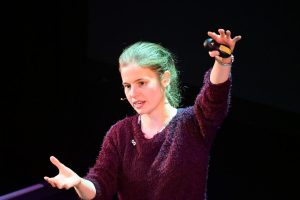
I really like having an outlet to be silly. We often get way too serious in life, and it just brings a lot of joy to the day to learn tools and practices to be silly. With work, I’ve started using the improv tools and warmups to get myself ready to give talks. Sometimes I’m giving talks to several hundred kids at once, so being able to warm up and get energy is super important. I also MC bigger events which involve a lot of thinking on your feet, fighting fires, listening to what the other speakers have said. There’s so many improv skills that go into that too. I’ve also started doing some work in activism, which is something I didn’t expect improv to be useful for, but actually it’s been really helpful with things like thinking of crazy ideas of things we can do and having creative protests, but also working out how to de-escalate situations. Improv helps you know how to listen to people, and you can diffuse situations because you can just listen, be in the moment, and find a solution.
Ian
Consultant and coach
Improv is one of the single biggest things that has helped me with navigating grown-up life. In the past I might have become attached or stuck in my ideas, and insistent that my own way was the best way. It would take me a long time to accept change. Improv has enabled me to recognize that life itself is a team sport, and most people are really well-intended even if their ideas are different to mine. And that actually there is real joy in collaborating and allowing things to happen as they happen. At work it’s really helped me with fast paced changing environments. My brain doesn’t get hung up when things change suddenly. Now I’m able to go- hunh! That’s interesting! Yes, And! In my personal life when things haven’t gone so well, I have been able to much more quickly accept the truth of the situation and make changes that are helpful for me and for other people. Both with small things like changes of plans and deeper and more difficult things too. With the deeper ones, it might take a bit longer, but often I think back to improv and thinking- if this was a scene I would just go with it. There probably isn’t a single area improv hasn’t positively impacted, in home, life, and work.
Robert Lock
Longtime Hoopla student and performer
I think Improv has given me a new social life post pandemic. I left my job after 15 years burnt out. Which was a good decision but it did mean leaving a lot of people I’d known for a long time behind. Then a lot of events that I used to go to didn’t survive the pandemic. Then I went to a festival and tried improv and eventually ventured out to a church basement near King’s Cross in the cold and the dark and found a whole new world where you can be silly and playful and meet the best people. I realized I could step onto stage and be anyone. There were no preconceptions about who could or could not act, no gatekeepers, no blocking or remembering lines or rehearsals, none of the barriers that get in the way. If you told me 5 years ago I’d be stepping onto stage and initiating scenes on a semi regular basis I’d have thought you were crazy. Just being able to step up and weave a story or scene is so magical, to work as a team to create a new reality in the moment is so amazing. Improv gave me permission to step onto stage and no longer be forgotten or overlooked but to make people laugh and to shine and while doing that to discover a warm and friendly community. It added a bit of magic and sparkle into my life. Improv, particularly how Hoopla does it, is very liberating. Steve works so hard to break down barriers to access. In improv you’re not going to be stopped from going on stage because you’re too old or too young or too fat or too thin or not pretty enough or the wrong skin colour and that’s amazing in itself. I was in the car on way to work and Chappel Roan’s Pink Pony Club came on and the lyrics got stuck in my head and I was thinking about them and suddenly was changing it to Hoopla’s Miller Pub as I realised how the story behind the song fits Hoopla in its own way. Much like in the song Hoopla have created a safe space where people can come and express themselves in a way they might not be able to do elsewhere and built an amazing community.
But don’t just take our word for it! Here’s some handy links to some additional information about how improv can help with real life including scientific articles, newspaper articles and blog posts.
>> 5 ways to bring improv magic into everyday life, blog post by Phoebe Kozinets.
>> More than laughs, improv for leadership and listening, article by Forbes
>> What improv teaches us about collaboration, by Kate Dohe and Erin Pappas
>> Four reasons to take an improv class, by Rob Asghar for Forbes
>> Percieved effects of improv on psycological wellbeing, research article by Zakiya Reid-Wisdom and Ramesh Perera-Delcourt
>> Four lessons leaders can learn from improv right now, by Doug Sundheim for Forbes
>> Improv experience promotes divergent thinking, uncertainty tolerance, and affective well-being, paper from Science Direct